
Hardy County Criminal Docket Searches
Two portals serve Hardy County. For a Circuit felony, a qualifying misdemeanor, or an appeal, register at WVPASS, the statewide public Circuit portal that launched in 2025 with free registration and Circuit documents reaching back to 1999. The page can load unevenly, though. A blank screen does not mean the Hardy County criminal docket you want is missing. MCRS covers the rest. Use MCRS for misdemeanors, warrants, preliminary felony stages, and other Magistrate matters. It takes a first name, last name, or case number, caps output at 30 results, and shows no documents. Whatever it returns, the Hardy Magistrate Clerk can confirm.
- Start with the exact case number, including hyphens.
- Choose WVPASS for Circuit Court or MCRS for Magistrate Court.
- Check both when a felony may have moved between court levels.
- Compare county, year, case type, and non-sensitive details.
- Read the chronology, then request any needed copy from the proper clerk.
Hardy Felonies Start in Two Places
A Hardy felony often leaves a paper trail in two places at once. Magistrates run preliminary proceedings and issue warrants. The felony itself lands in Circuit Court, the county's general-jurisdiction court of record. So one name search might surface a Magistrate entry. The motions, plea, and sentencing sit later on the Circuit docket. The Court Records Access page routes you to both systems. For Circuit validation and documents, contact the Circuit Clerk at 204 Washington Street, Moorefield. You can also call 304-530-0230. The Magistrate Clerk, at 304-530-0212, validates lower-court entries and provides copies. Counter, phone, mail, and fax all work as request channels. Give the case number and document name before you mail a request. Confirm the fee, certification, payment, and return-mail terms. Fax 304-530-0231 for Circuit and 304-530-0213 for Magistrate.
Note: A Magistrate disposition may not describe a later Circuit Court case.
Criminal Dockets: What They Show
Criminal Rule 55 covers the clerks of both courts. They must keep records and enter every order and judgment with its date. So a docket line might record a filing. The next line might record a hearing or an entered order instead. No single line settles the outcome; only the later docket and record can do that.
| Case number | The clerk identifier. 97-F-20 is a historical Hardy felony-format example, not a live lead. |
|---|---|
| Charge | The alleged offense and filing; a charge does not prove guilt. |
| Setting | An arraignment, pretrial event, motion hearing, trial, or sentencing date. |
| Plea or verdict | A response or finding that must be read with later entries. |
| Disposition | The recorded outcome or status resolution. |
| Judgment | The formal entered decision and date. |
Hardy Entries Need Full Context
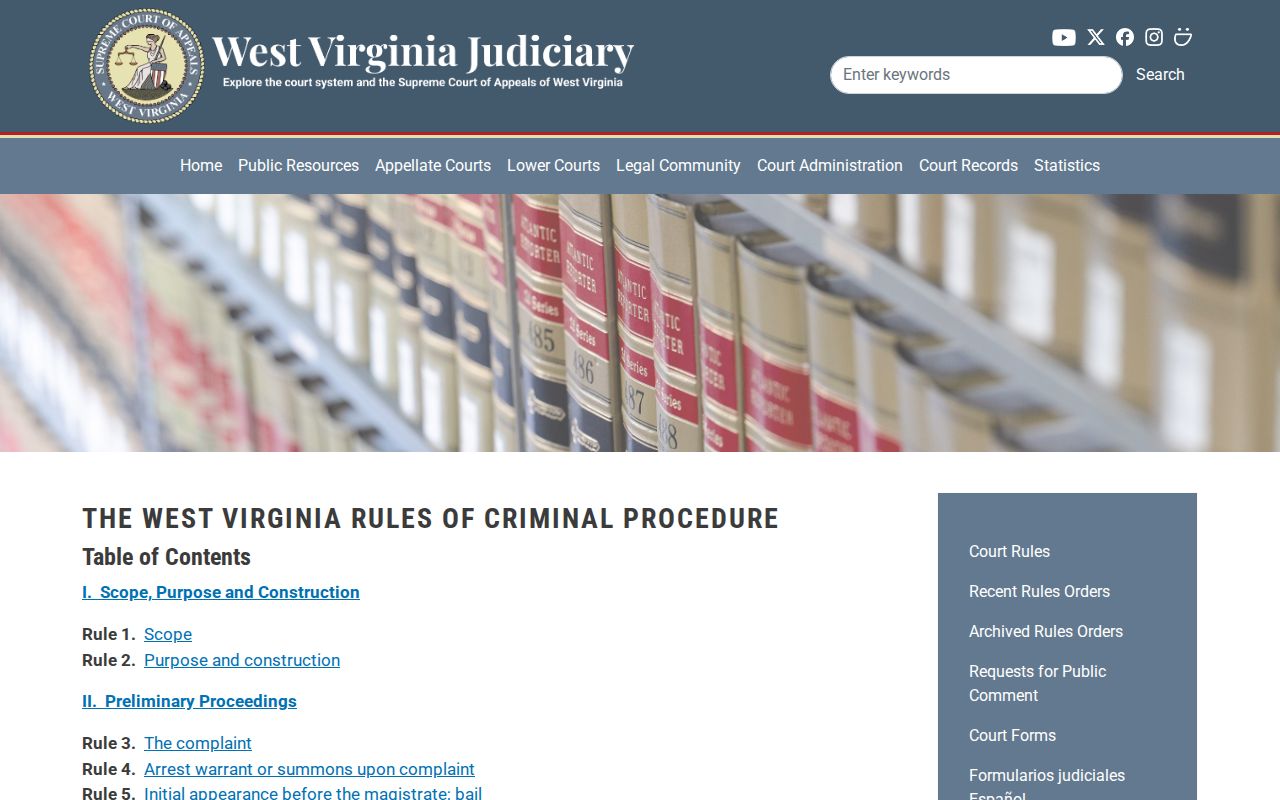
The official criminal procedure rules lay out the framework behind Hardy criminal records. They also separate a filed motion from the order that decides it.
Context is everything here. A warrant reference is not a conviction, and a setting does not prove a hearing ever happened. A sentencing date is not the entered judgment. When the online chronology looks thin, ask the clerk whether a public paper entry, scan, or later order exists.
- Arraignment
- A hearing where the charge is addressed and a plea may be entered.
- Disposition
- The outcome or status resolution of a charge or case.
- Setting
- A scheduled event that may be continued or reset.
- Expungement
- A process that seals or removes eligible records, subject to exceptions.
Criminal Case Stages on the Docket
A Hardy County criminal docket grows as the case moves. It might open with a Magistrate complaint or citation. Felony preliminary work can then branch into a separate Circuit case. From there the chronology may list arraignment, motions, pretrial settings, plea or trial, judgment, sentencing, and later activity. Several entries per stage are common.
Docket flow: Filing › Arraignment › Pretrial › Plea or Trial › Disposition › Sentencing
Dates carry distinct meanings. A filing date, an order-entry date, a hearing date, and a disposition date are four different things, so confirm the current setting with the clerk. Resets can leave an older online result stale.
Hardy Magistrate Rules Shape Entries
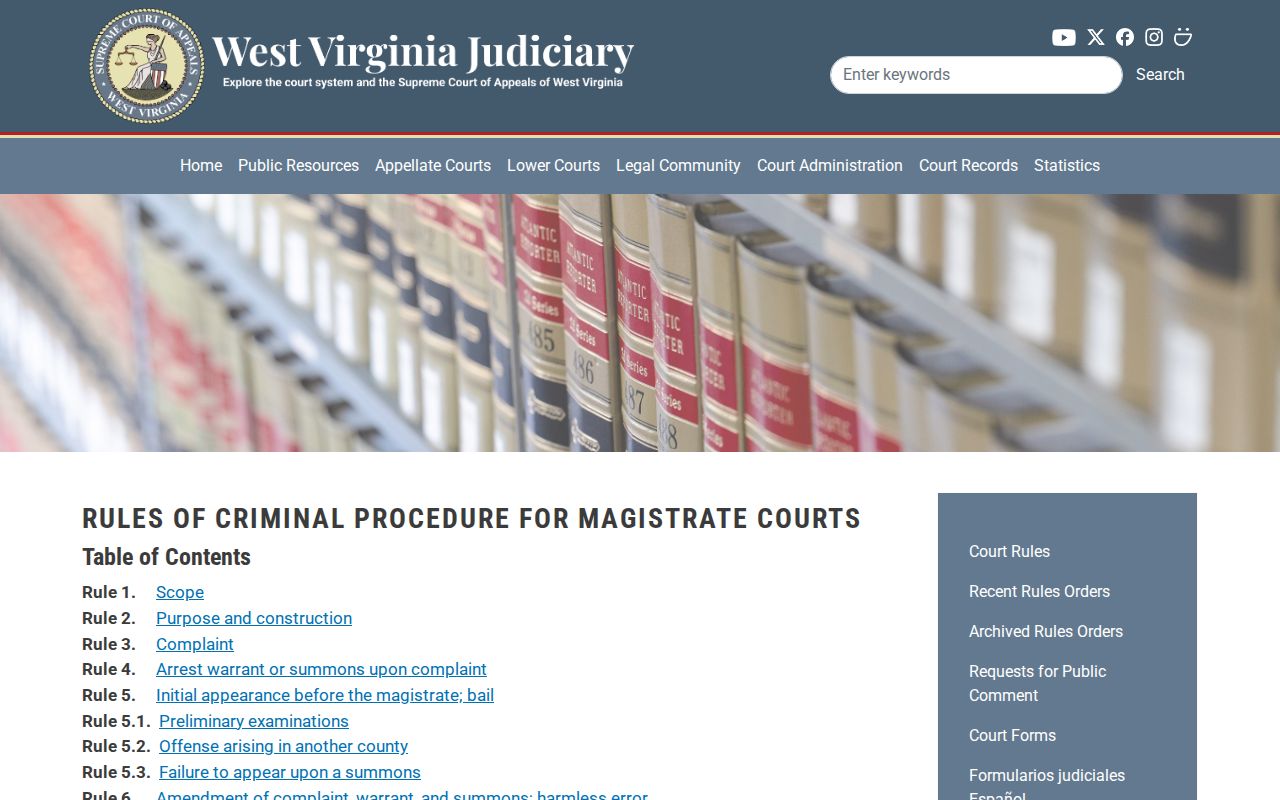
The Magistrate criminal rules govern citations, appearances, pleas, trial notices, dismissals, and failures to appear. They explain why a lower-court docket shows an answer date or trial notice while a Circuit setting looks different.
Some motor-vehicle citations carry real teeth. A failure to respond or appear can trigger prosecutor and DMV notice. A warrant may be sought. An online failure-to-appear line still does not establish present status. Contact the Magistrate Clerk promptly. And remember, the payment system is an exact-ID tool, not a full criminal docket search.
Hardy County Criminal Docket Courts
Magistrate Court takes misdemeanors, warrants, preliminary felony examinations, and other first steps. Search its information through MCRS. Get papers from the Magistrate Clerk. Circuit Court carries the felonies, certain misdemeanors, and appeals from below. Search WVPASS there, then confirm through the Circuit Clerk.
| Court | Work | Route |
|---|---|---|
| Magistrate | Misdemeanors, warrants, felony beginnings | MCRS, then clerk |
| Circuit | Felonies, some misdemeanors, appeals | WVPASS, then clerk |
| Municipal, if active | Town ordinance matters | Ask the town custodian |
2024 Hardy Criminal Filing Snapshot
The 2024 annual tables offer dated filing context, not counts of people or convictions. Hardy reported 97 Circuit criminal filings: 71 felonies, one Magistrate appeal, one misdemeanor, and 24 other filings. The Magistrate table told a separate story of 98 felony matters, 1,123 misdemeanors, six worthless-check matters, and 42 juvenile matters.
Resist adding categories across court stages. The judiciary dashboard labels newer data preliminary, while annual reports stand as the authoritative dated source.
Access Rules for Criminal Dockets
Hardy criminal records are generally open, but not without limits. Juvenile, sealed, expunged, domestic-violence, mental-hygiene, and other protected materials may be withheld. Private identifiers get redacted. A missing PDF has several possible causes. It might stem from a sealed filing, a paper submission, a delayed scan, an access rule, or a portal fault.
Key rules:
West Virginia Code § 51-4-2 generally opens court papers to inspection unless special law applies.
West Virginia Code § 49-5-103 generally protects juvenile records.
West Virginia Code § 61-11-26 governs eligible expungements and covered records.
West Virginia FOIA does not sweep away court-specific limits. Start with the portal and the clerk's office. Ask whether the exact entry is public and whether an ordinary or certified copy is available.
Hardy Treatment Files Use Two Numbers
The South Branch Adult Treatment Court covers a region that includes Hardy. When someone is referred, a new treatment file opens under its own number. The original criminal number stays alive as the source case. So one participant can have two active files at once. The format looks like 19-TAD-001. That is only an example of the numbering style. It is not a real participant record.
Want the underlying case? Run a docket search on the Hardy criminal docket. Use the regular case number. The Circuit Clerk can explain how public entries connect to the treatment file. A judge's referral order is public, but treatment progress and personal health details are not. Program routing does not open a participant's private record to the world.
This split often looks like a gap. The criminal docket may hold the charge, the plea, the judgment, or the referral order. The treatment number carries later program activity behind different access rules. Two numbers do not mean two prosecutions. Give the Circuit Clerk both numbers if you have them. Never publish what a participant did in treatment.
One more layer matters here. CourtPLUS is the internal filing and case-management system for court staff and registered users. WVPASS is the public portal for Circuit records. Paper filings may get scanned into the Vault repository. Sealed documents still go through the clerk's paper process. An electronic Hardy County criminal docket and the clerk's physical file can differ at any given moment. The clerk decides access and certifies what counts.